
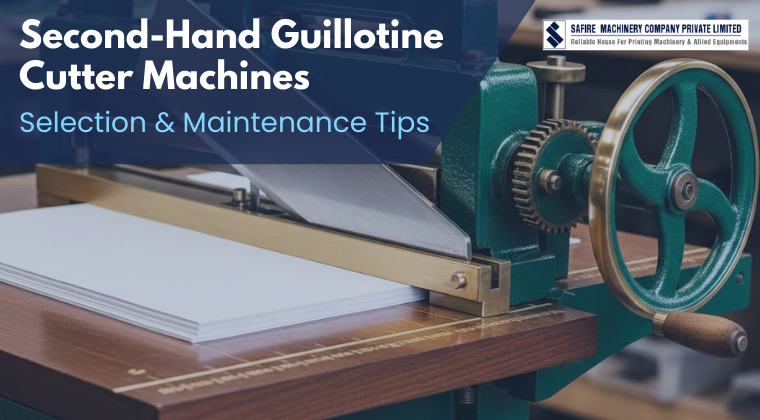
Investing in industrial cutting equipment is a major decision for print shops, packaging units, and commercial binders. While new machines offer the latest technology, they often come with high capital costs that may not suit every business – especially startups or expanding mid-sized operations. This is where second-hand guillotine cutter machines become a practical and strategic alternative.
However, buying used machinery requires careful evaluation. A wrong purchase can lead to downtime, safety risks, and unexpected repair costs. This guide walks you through how to select the right machine and maintain it properly to maximize performance and lifespan.
Let’s explore what truly matters before and after your purchase.
Understanding Second-Hand Guillotine Cutter Machines
Guillotine cutters are heavy-duty machines designed to cut large stacks of paper or board with precision using a sharp vertical blade. In commercial printing and finishing environments, they are essential for trimming brochures, books, labels, and packaging materials.
Key advantages of used Guillotine:
- Lower upfront investment compared to new machines
- Faster ROI for small and medium printing operations
- Access to premium brands at affordable pricing
- Proven operational reliability in many cases
- Immediate availability (no long manufacturing wait times)
Many used machines originate from facility upgrades rather than failures, meaning they still deliver years of productive use.
Common Applications of Guillotine Machine
Second-hand guillotine cutters remain versatile across industries:
Used Guillotine Machine
- Commercial printing houses
- Bookbinding units
- Packaging and carton production
- Digital print finishing
- Educational or institutional print centers
Understanding your intended workload helps narrow down suitable machine specifications before you begin evaluating options.
Selection Checklist: How to Inspect Before You Buy
When evaluating second-hand guillotine cutter machines, careful inspection is crucial. Here is a structured checklist to avoid costly mistakes.
1. Mechanical Inspection
- Blade Condition: Check for wear, uneven edges, or sharpening frequency. A damaged blade affects cutting accuracy.
- Back Gauge Precision: Ensure smooth movement and accurate measurement calibration.
- Clamp Pressure System: Verify uniform pressure across sheets to prevent uneven cuts.
- Hydraulic System: Inspect for oil leaks, unusual noise, or pressure fluctuations.
- Machine Frame Stability: Look for cracks, rust, or vibration issues.
Mechanical accuracy directly determines output quality. Even a high-end used paper cutting machine can underperform if these elements are neglected.
2. Electrical Inspection
- Inspect control panel wiring.
- Test programmable functions (if available).
- Check display responsiveness and memory settings.
- Confirm smooth motor operation without overheating.
Electrical faults can lead to unexpected downtime and expensive repairs.
3. Safety Inspection
Safety should never be compromised. Ensure:
- Functional safety light curtains
- Emergency stop buttons working properly
- Blade guard intact
- Proper two-hand control operation
A professional second hand machine dealer should provide machines that meet operational safety standards.
Essential Maintenance Tips for Long-Term Performance
Once purchased, proper maintenance ensures efficiency, safety, and extended service life. Many failures occur due to neglect rather than mechanical limitations.
Routine Cleaning
Dust and paper particles accumulate rapidly.
Daily cleaning practices:
- Remove debris from cutting bed
- Clean guide rails
- Wipe exposed surfaces
- Inspect safety sensors
Clean machines operate smoother and prevent premature wear.
Blade Care & Sharpening
The blade is the core working component.
Best practices include:
- Regular sharpness inspection
- Professional sharpening at recommended intervals
- Correct installation alignment
- Rotation or replacement when needed
Dull blades cause poor cuts and stress mechanical components.
Lubrication Schedule
Friction reduction is essential for machine longevity.
Maintain lubrication of:
- Moving rails
- Hydraulic components
- Bearings
- Drive systems
Calibration Checks
Precision declines over time without adjustment.
Periodic checks should include:
- Backgauge alignment
- Clamp pressure accuracy
- Digital measurement systems
- Squareness verification
Regular inspections:
- Emergency stop functionality
- Guard positioning
- Wiring condition
- Control panel response
These checks protect operators and prevent compliance issues.
New vs Used Guillotine Machine
|
Factor |
New Machine |
Used Machine |
|
Initial Cost |
Very High |
40–60% Lower |
|
Depreciation |
Rapid |
Minimal |
|
ROI Time |
Longer |
Faster |
|
Warranty |
Manufacturer-backed |
Dealer-backed |
|
Lifespan |
10–15 Years |
5–10 Years (with maintenance) |
For many SME printers and commercial print shops, investing in second-hand guillotine cutter machines offers a practical balance between affordability and productivity.
Conclusion
Buying pre-owned industrial equipment is not just about saving money—it is about making informed decisions. While the cost advantage of second-hand guillotine cutter machines is significant, careful inspection and consistent guillotine cutter maintenance are the keys to long-term success.
For print shop owners, SME printers, and commercial printing businesses, partnering with a reliable used printing machine dealer ensures confidence in every purchase.
If you are planning to invest in a dependable used paper cutting machine, choose inspected, performance-tested equipment that delivers precision, safety, and durability.
